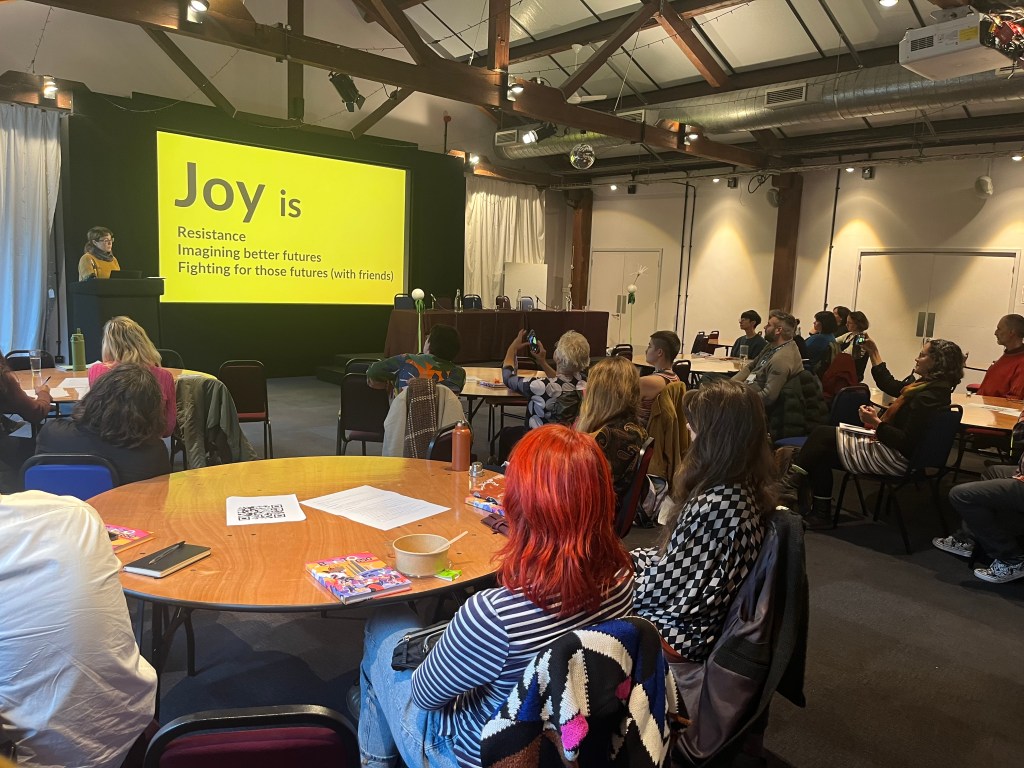
Joy is often playful and silly but it is far from frivilous. Our understanding of joy is shaped through the perspective of marginalised activists who created concepts such as Disabled Joy and Black Joy.
For these movements, joy is more complex than superlative happiness. They position joy as a site of resistance and resilience that asserts the individual’s essential humanity and right to pleasure in the face of oppression. This allows activists in these spaces to stay strong and healthy in the face of their struggles. It doesn’t happen automatically, however. Joy is an active practice that demands access to happiness alongside anger, fear, sadness, guilt and distress.
As Disabled women with long term health conditions, Emma and Rachel understand this first-hand. Joy has been a pathway to both health and allowing them to continue as activists.
As the planetary crisis worsens, people across the world are facing increasing threats, whether from natural disaster, collapse of systems or the rise of the far right. Climate distress is on the rise, leading to increasing polarization, fracturing of communities, lowered personal resisliance, and despair. Joy is an essential solution to these problems.
Joy can connect people across divides.
Joy can hold space for trauma.
Joy can reset our nervous systems to allow for conversations to happen.
Joy supports activists to stay with the trouble and keep on fighting.
We need joy now more than ever.
 Climate Joy